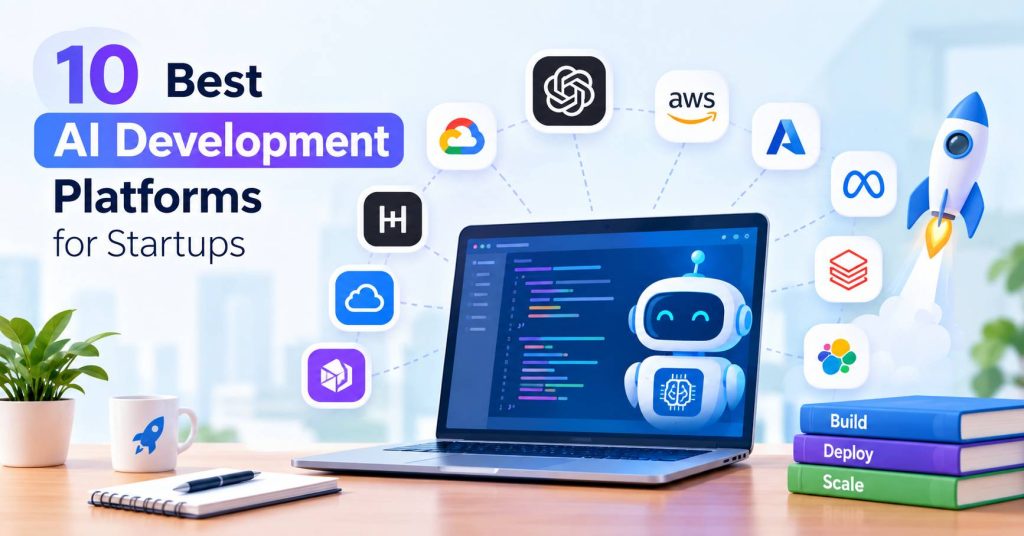
Choosing the right AI development platform can directly affect how quickly a startup launches its first product and how efficiently it manages costs.
Founders often begin searching for these platforms when their team lacks advanced machine learning expertise or the project timeline is tight.
Hiring a complete AI engineering team may also be too expensive for an early-stage business with limited resources and changing requirements.
AI development platforms can help bridge this gap by providing tools, models, integrations, and development resources without building everything from scratch.
However, each platform takes a different approach, so the right choice depends on your product, technical requirements, budget, and long-term goals.
What to Look For Before Comparing Platforms
Not every AI platform serves the same purpose. Some are built for training custom models from scratch. Others let you plug pre-built AI capabilities, like image recognition or natural language processing, straight into an existing app. A few sit in between, offering low-code tools that let non-specialists build working prototypes.
Before committing to one, it helps to think through three things: how much technical talent your team already has, whether you need a custom model or a pre-trained one will do, and how the pricing scales once you move past the free tier. A platform that looks affordable during testing can become expensive fast once you’re processing real user traffic.
1. Google Cloud Vertex AI
Vertex AI brings together Google’s machine learning tools under one roof, covering everything from data labeling to model deployment. Startups that already use Google Cloud for hosting tend to get the most value here, since Vertex AI integrates directly with BigQuery and other Google services without extra configuration. The learning curve is steeper than some competitors, so teams without an ML engineer on staff may need a few weeks to get comfortable with it.
2. Amazon SageMaker
SageMaker is AWS’s answer to end-to-end machine learning development, and it’s a common choice for startups already running infrastructure on AWS. It handles data preparation, model training, and deployment, with built-in tools for monitoring model performance over time. The pricing model charges for compute usage, so costs can climb quickly during heavy training runs, which is worth budgeting for ahead of time rather than discovering after the fact.
3. Microsoft Azure AI Studio
Azure AI Studio combines pre-built AI services (like vision and language APIs) with tools for building and fine-tuning custom models. It’s particularly useful for startups building products for enterprise clients, since many larger companies already run on Microsoft infrastructure and prefer vendors that fit into their existing security and compliance setup. Azure’s documentation is thorough, though the sheer number of services available can feel overwhelming to a small team trying to move fast.
4. OpenAI Platform
For startups building products around large language models, chatbots, content generation, or coding assistants, the OpenAI Platform is often the fastest route to a working prototype. The API access to GPT models means a small team can integrate serious language capabilities without training anything from scratch. Costs are usage-based, tied to the number of tokens processed, so it’s worth testing with a limited rollout before scaling to your full user base.
5. Hugging Face
Hugging Face has built its reputation on open-source models and a community-driven approach to AI development. Startups with some technical depth can use its model hub to find and fine-tune thousands of pre-trained models rather than starting from zero. It’s less of a polished, all-in-one platform and more of a toolkit, which suits teams that want control over their model choices and don’t mind a bit more hands-on setup work.
6. DataRobot
DataRobot focuses on automated machine learning, letting teams with limited data science expertise build and deploy predictive models. It’s aimed more at business use cases like forecasting, fraud detection, and customer churn prediction than at building consumer-facing AI products. Startups in fintech or operations-heavy industries often find it useful precisely because it reduces the need for a dedicated data science hire early on.
7. IBM Watsonx
Watsonx is IBM’s platform for building, training, and deploying AI models, with a strong emphasis on governance and explainability. That makes it a reasonable fit for startups in regulated industries like healthcare or finance, where being able to explain how a model reached a decision matters as much as the decision itself. It’s not the fastest platform to get started with, but the compliance features can save time later when dealing with audits or client due diligence.
8. Runway
Runway has carved out a niche in generative AI for video, image, and creative content, making it popular with startups in media, marketing, and design tools. Its interface is more approachable than most enterprise ML platforms, since it’s built for creative professionals rather than engineers. If your product involves generating or editing visual content at scale, Runway is worth evaluating before building custom models for the same purpose.
9. Replicate
Replicate lets developers run open-source AI models through a simple API without managing the underlying infrastructure. This appeals to startups that want to experiment with multiple models quickly, comparing performance and cost before committing to one. It’s a good middle ground between the flexibility of Hugging Face and the simplicity of a managed API service.
10. Lovable and Similar Low-Code AI Builders
A newer category of tools lets non-technical founders build working AI-powered apps through natural language prompts rather than code. These are best suited to early validation, testing an idea with real users before investing in a full engineering build. They won’t replace a dedicated development team once you scale, but they can save months of early development time.
Finding the Right Fit for Your Startup
With so many platforms available, comparing them one by one can turn into its own project. Browsing a curated AI Tools Marketplace USA can narrow the search down to platforms already vetted for startup use cases, rather than sorting through generic vendor lists.
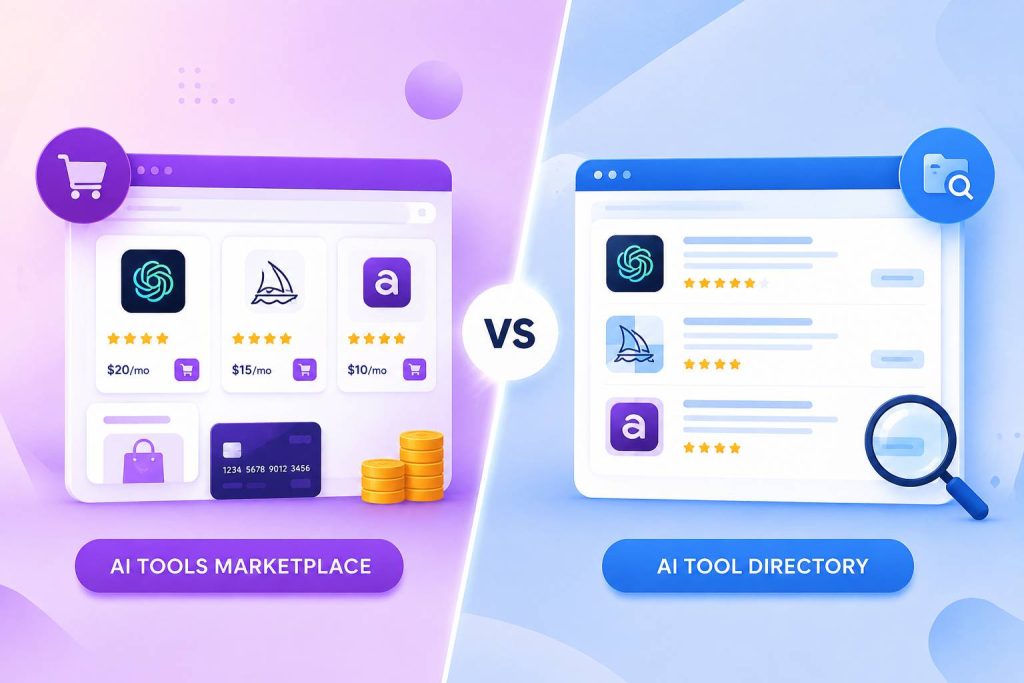
It also helps to understand how a marketplace differs from a simple directory listing tools alphabetically. The distinction between an AI Tools Marketplace vs AI Tool Directory comes down to curation and support, and it affects how much research you’ll need to do yourself before making a decision.
If your team has been relying on location analytics tools and is looking for alternatives with AI capabilities built in, it’s worth reviewing current Placer.ai Alternatives before assuming you need to build that functionality from scratch.
For startups evaluating platforms specifically for business operations rather than product development, a guide on AI Tools Marketplace for Business walks through the criteria that matter most at that stage, from integration support to contract flexibility.
And if this is your first time sourcing AI tools for a startup, a broader look at Platforms to Find AI Tools can help you understand the landscape before narrowing down to a shortlist.
Making the Decision
There’s no single best platform on this list, only the one that matches your team’s technical skill, your product’s requirements, and your budget for the next twelve months. Start by identifying whether you need a custom model or a pre-built one, then test two or three candidates with a small project before committing. The platform that wins a pilot with your actual data and actual team will tell you more than any comparison chart can.